
Mamata Banerjee Protests Alleged Attack on Abhishek Banerjee, Defies Police Denial of Permission
By Drishtikon, June 2, 2026
In a major political development in West Bengal, Chief Minister Mamata Banerjee led a protest in Kolkata against the alleged attack on her nephew and senior Trinamool Congress leader Abhishek Banerjee. The demonstration drew significant public attention because it was organized despite police reportedly refusing permission for the gathering.
Background of the Controversy
The protest was triggered by an incident in Sonarpur, South 24 Parganas, where Abhishek Banerjee's convoy allegedly came under attack during a political visit. According to Trinamool Congress (TMC) leaders, stones and eggs were thrown at his vehicle by a group of protesters. Party leaders claimed the attack was pre-planned and intended to intimidate senior TMC figures.
Abhishek Banerjee later alleged that the attackers were attempting to cause serious harm and accused political opponents of creating an atmosphere of violence. The incident quickly became a major issue within the party, prompting calls for statewide protests.
Mamata Banerjee's Protest
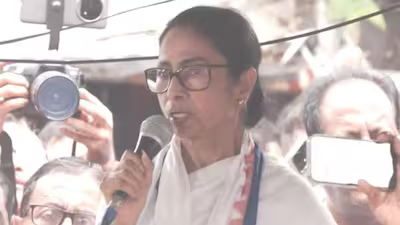
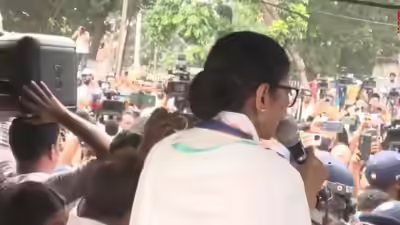
Mamata Banerjee organized a sit-in demonstration in Kolkata to condemn the attack and what she described as a growing trend of political violence against TMC leaders. The protest took place even though authorities had reportedly denied formal permission for the event.
Addressing party workers and supporters, Mamata Banerjee accused rival political forces of attempting to destabilize the TMC through intimidation and violence. She argued that democratic rights were being restricted and claimed that opposition groups were being allowed to operate freely while TMC activities faced obstacles.
The Chief Minister also questioned the handling of the incident by authorities and demanded accountability for those responsible for the attack on Abhishek Banerjee.
Strong Message to Party Workers
During her speech, Mamata Banerjee urged party workers to remain united and resist attempts to divide the organization. She warned leaders against maintaining ties with political rivals and stressed the importance of discipline within the party.
The TMC chief said that attacks on individual leaders were ultimately attacks on the party itself and vowed that such incidents would not weaken the organization.
TMC's Allegations
Senior leaders of the All India Trinamool Congress alleged that their members have increasingly faced threats, harassment, and restrictions on political activities. They accused opponents of encouraging unrest and claimed that law enforcement agencies were not acting impartially.
The party maintained that the Sonarpur attack was part of a broader political strategy aimed at undermining its leadership.
Opposition Response
Opposition parties rejected the allegations and accused the TMC of using the incident for political purposes. Rival leaders argued that the ruling party was attempting to divert attention from governance issues and internal political challenges.
Political observers noted that both sides have exchanged accusations frequently in recent months, reflecting the intense rivalry that characterizes West Bengal politics.
Political Significance
The protest comes at a time of heightened political tension in West Bengal. The attack on Abhishek Banerjee has become a significant political flashpoint because he is widely regarded as one of the most influential leaders in the TMC and a key figure in the party's future leadership.
By personally leading the demonstration, Mamata Banerjee signaled the importance the party attaches to the incident and sought to mobilize supporters around the issue of political violence and democratic rights.
Conclusion
The controversy surrounding the alleged attack on Abhishek Banerjee has intensified the political atmosphere in West Bengal. Mamata Banerjee's decision to stage a protest despite the lack of police permission has further escalated the confrontation between the TMC and its opponents. As investigations continue and political accusations persist, the incident is likely to remain a major topic in the state's political discourse in the coming weeks.